

Amazon: Autonomy, Strength, and the Cost of Going It Alone
What it cost to be the one everyone followed — and no one wanted to be close to

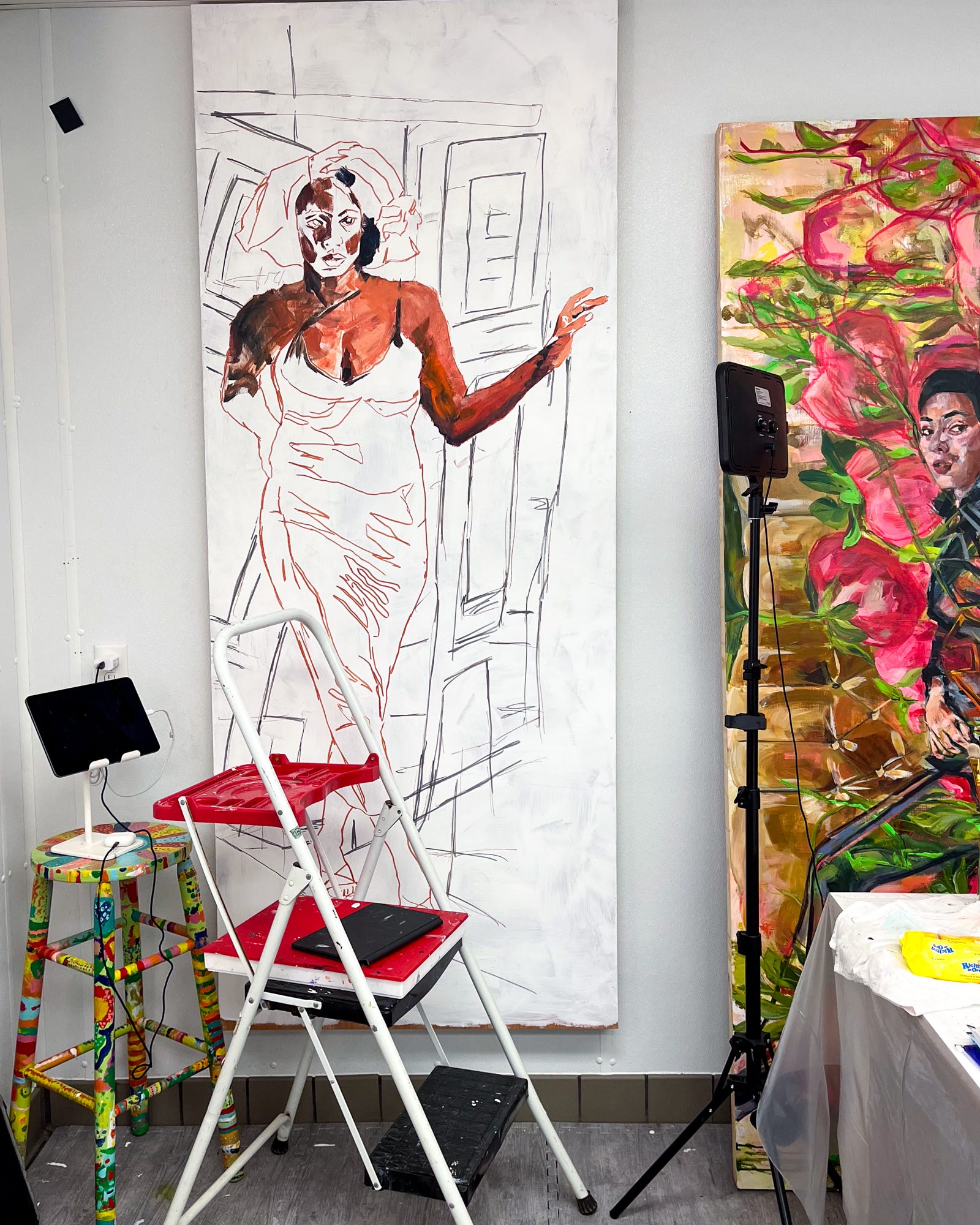
Where the Mother holds, the Amazon separates.
That is the first and most important distinction.
Not better. Not worse. A different orientation entirely — outward rather than inward, self-directed rather than other-directed. Where the Mother creates space for others to become, the Amazon creates space for herself. She moves. She acts. She claims.
I knew this one from the inside long before I had a name for it.
—
In Toni Wolff’s framework, the Amazon represents autonomy, self-definition, and the capacity to act independently.
She is the part that moves outward — that claims space, direction, and agency. That sets the terms. That doesn’t wait for permission.
At her fullest expression, the Amazon is self-directed, capable, decisive, and resilient. She acts. She chooses. She moves forward without needing external validation to do so.
There is real power in this. Real integrity.
The Amazon leads with honesty. She is trustworthy — not because she performs trustworthiness, but because she holds herself to a high standard and expects others to do the same. People follow her because they know she can deliver. Because she doesn’t quit. Because when she says she will do something, she does it.
In a world that has historically asked women to shrink, defer, and wait, the Amazon’s refusal to do so is not a small thing.
For me, it was never a choice. It was a necessity.
The Navy. Corporate leadership. Global Vice President. Sole provider for a family of five. These were not environments that rewarded softness or asking for help. They rewarded capability, endurance, and the ability to keep moving regardless of what was happening underneath.
So I kept moving. And I was good at it. Exceptionally good at it.
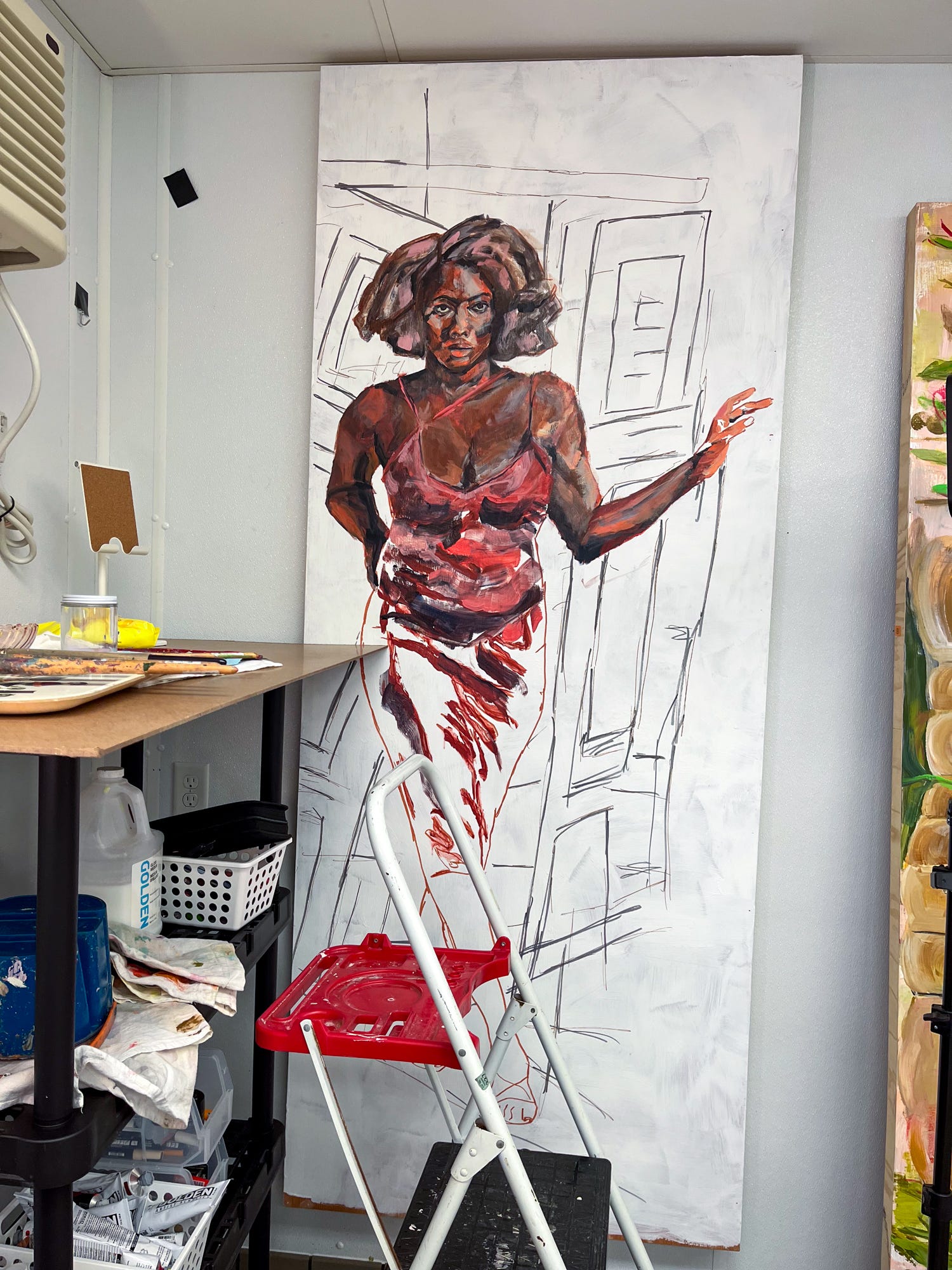
Right before I was diagnosed with breast cancer, I received a 360-degree review — customary after a significant promotion. The feedback was life-changing.
The people who worked for me said they would follow me into battle. They trusted me to win.
But they didn’t like me.
One person described me as cruel. Mean-spirited. I was scary — that word is mine, but the feeling behind it wasn’t wrong.
This hurt me deeply. I had no idea. I genuinely believed I was kind. I believed I was doing good work — and in many ways, I was. But for the company. Not for the people. Not for the relationships.
I was rewarded financially. Promoted. Respected for my capability.
And nobody wanted to be around me.
Shortly after — cancer.
Breast cancer, specifically. And what I notice now is this: the year before, I had already lost my uterus to a hysterectomy. My children had come through IVF. My most distinctly feminine anatomy — the hidden parts, the internal parts, the parts that carry and create life — had been removed piece by piece.
And then the breasts. The visible part. The external expression of the physical feminine.
My body was losing its femininity at the same rate I was refusing to live from it.
That is not lost on me.
—
In shadow, the Amazon can become guarded, emotionally distant, over-reliant on self, and disconnected from vulnerability.
Strength becomes armor.
Independence becomes isolation.
I had learned early — long before corporate life, long before the Navy — never to need anyone. Never to depend on anyone for anything. I took pride in being self-sufficient. I took pride in not needing.
I thought needing others was weakness.
I didn’t see how hard it must have been to love me. To show me affection when I couldn’t receive it. I thought being intimidating was power.
It wasn’t. It was just lonely.
The 360 review and the cancer arrived within months of each other — and both were saying the same thing. From the outside and from the inside. Nobody wants to be close to you. And your body is dismantling the parts of you that are built for nurturing and connection.
After cancer, one of my daughters told me she had never seen me cry.
Imagine that.
And then cancer came. And I cried. Almost every day.
—
Here is what I didn’t understand for a long time:
In Toni Wolff’s model, the Amazon and the Hetaira sit directly opposite each other on the archetypal axis.
Which means the archetype I had lived in most fully — for decades — was in direct tension with the one that was hardest for me to access.
The Hetaira: relational, connective, present to intimacy. Alive to the inner life of another.
I had rejected her almost entirely. I called it weakness. I called it submission. I couldn’t see what I was losing.
What I was losing was connection. Real connection — the kind that requires you to put down the armor and be seen.
The strength that protects you can also be the thing that keeps you alone.
—
This archetype wasn’t something I observed from a distance.
It was something I had lived through — fully, for decades — before I understood what it had cost me in the living.
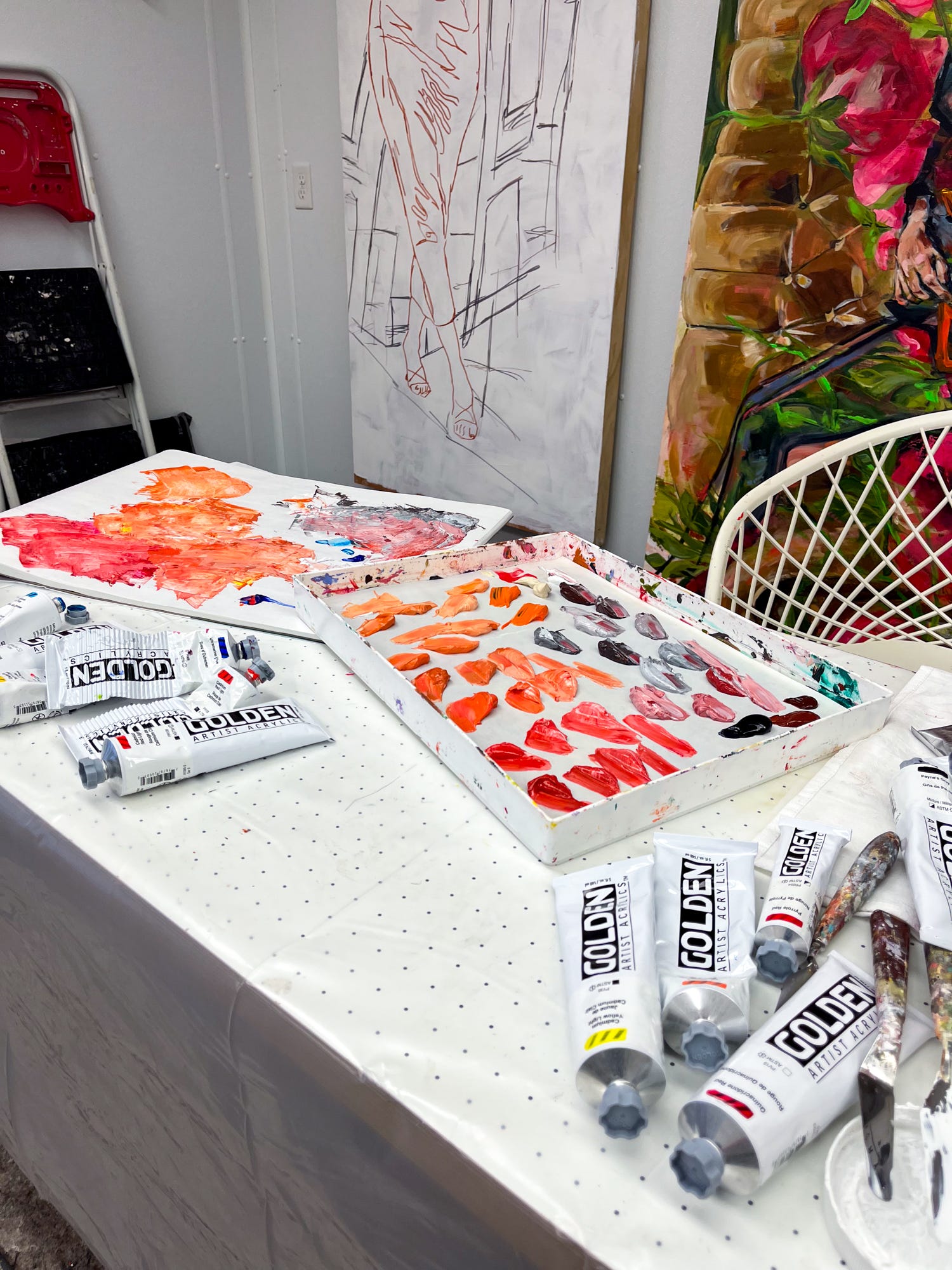
The painting that emerged holds both the power and the distance of this energy.
Movement. But not always connection.
Strength. But not always softness.
That’s what the next post is about.
More soon.